Potato
Ready to harvest
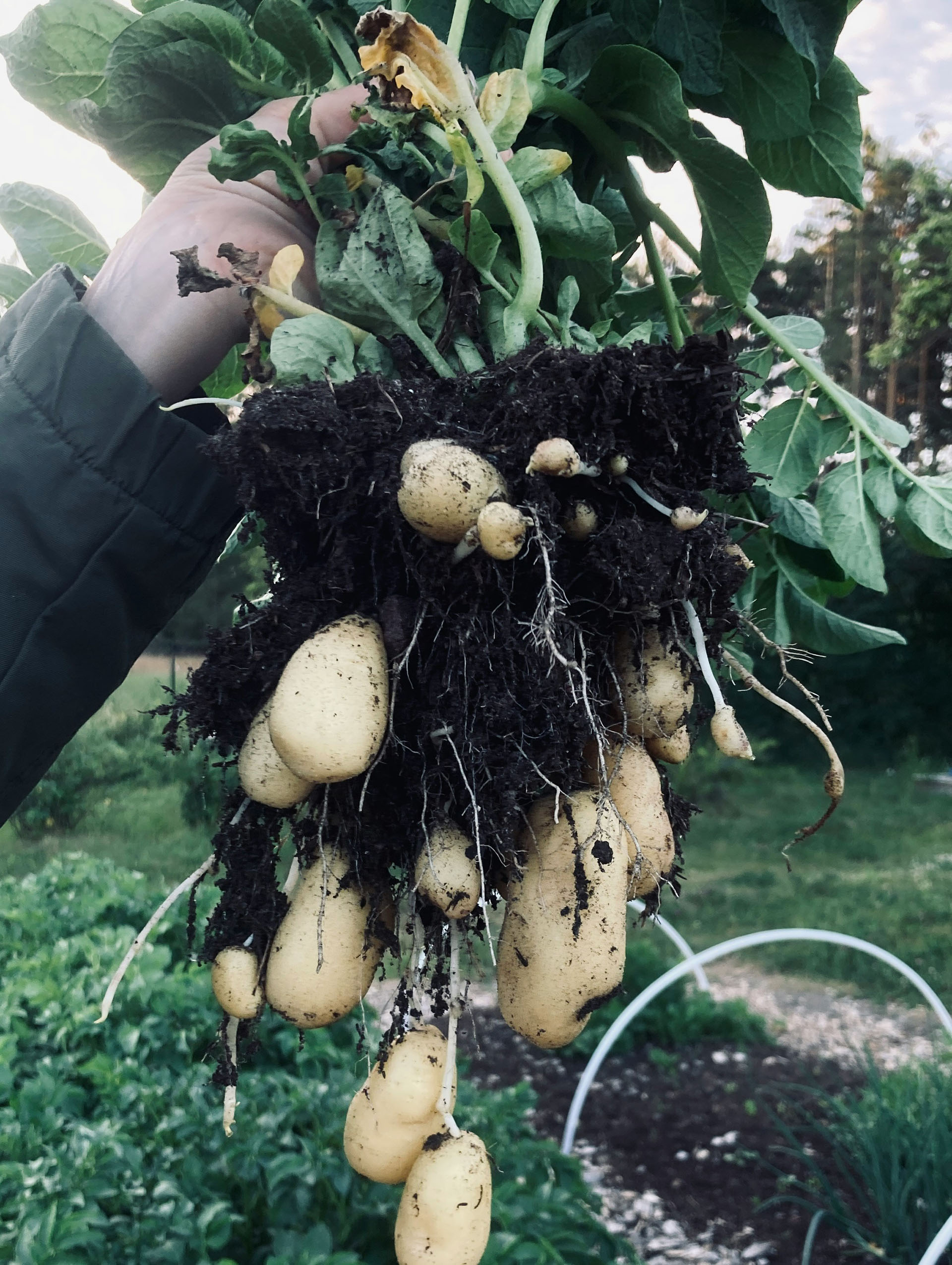
The potato plant (Solanum tuberosum) is a herbaceous perennial, with flowers that range from white to purple. What we commonly refer to as a potato is the plant’s underground stem tuber, which makes for a hardy, easy-to-store crop that contains vitamins and minerals. The skin is full of fibre, and potatoes have little, if any, fat content.
What it's used for
Many cultures have taken the potato as a staple of their cuisines. In the UK it’s often chopped and fried as part of the iconic dish, fish and chips. Potatoes can be boiled, baked, mashed, and turned into croquettes. In some parts of the world, they are used as animal fodder or even used to brew alcoholic spirits.
Grow your own at home
Potato plants grow best in open, sunny growing spaces with soil that is rich and fertile. They are usually grown from small tubers, commonly sold under the name ‘seed potatoes’.
You can give them a head start before sowing by allowing them to sprout little stems. The soil will need plenty of compost or manure, which can be laid down in advance or just after planting.
The best sowing time is early spring, but you can usually fit in three planting times: late March (called first earlies), early to mid-April (second earlies), and mid-April to early May (maincrop). Being sensitive to the cold, the best sowing time can vary a few weeks either way.
You can sow them in a trench about 15 cm deep or simply lay them in a shallow hole and cover them in compost. The distance between tubers can depend on when you are sowing. You can grow potatoes in large containers, with one seed potato in a pot around 30 cm in width and depth. They’ll need regular weeding in the first few weeks.
You can harvest the tubers from June and July (first earlies), July and August (second earlies), and August through to October (maincrop). Dig carefully around the plant, or use your hands, to locate and detach the tuber. Dispose of potatoes that are green, as they may be poisonous.
Our planting guides are designed to help you get the best from your fruit, vegetables, and herbs. Every garden is unique, so growing conditions, weather, soil, and climate can affect results. Use this information as a helpful guide, and adapt it to suit your local conditions and gardening experience. Happy growing!