The bay tree on your doorstep
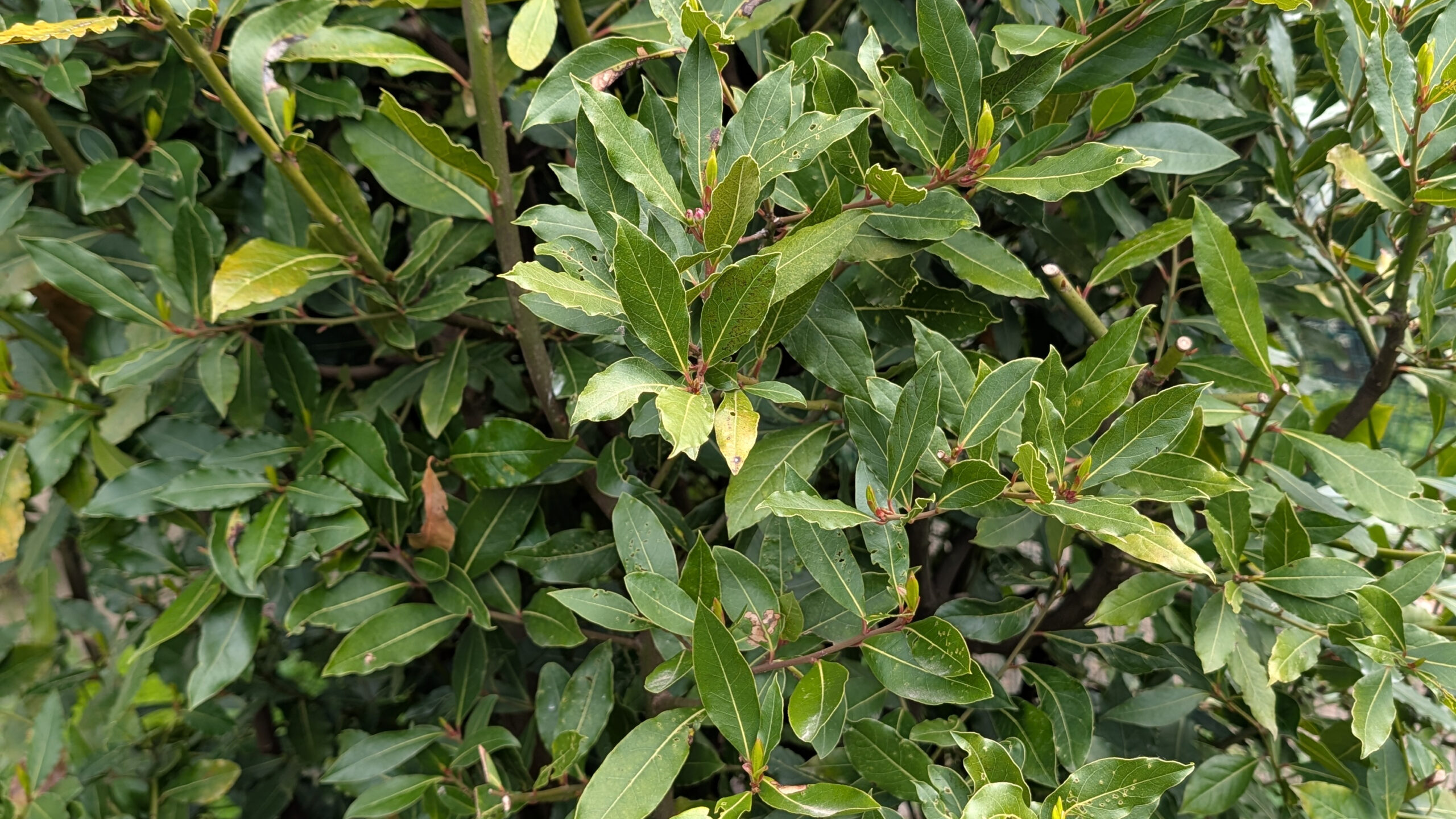
Walk past the police station on Burnley Road and you might not stop to think much about the raised bed tucked alongside it. But look closer and you’ll find something worth picking: bay. Permanent, perennial, glossy-leaved and completely free to anyone who wants it.
There’s something quietly reassuring about the bay trees in our beds. In May, when the runner beans are just seedlings and the courgettes haven’t thought about showing up yet, the bay is already there, dark and fragrant and ready. In November, when the last of the kale has been picked and the beds are settling in for winter, the bay is still there. It doesn’t rush. It doesn’t finish. It just gets on with it, month after month, while everything around it comes and goes with the seasons. In the hungry gap — that stretch between late winter and late spring when the annual veg has run out and the new growth hasn’t arrived — a handful of fresh bay leaves is one of the things our beds can still reliably offer you.
There are bay plants in several of our beds around Todmorden — the police station beds, the medical garden, and others — and for most of the year they’re quietly doing their thing while the seasonal veg gets all the attention.
Which is a shame, because fresh bay is one of those ingredients that can genuinely change a dish.
Most people know bay as the dusty dried leaf at the back of the spice rack — the thing you throw into a stew and then fish out at the end, half-forgotten. Fresh bay is something different. The flavour of fresh and dried bay differs quite significantly — while dried leaves take on herbal notes reminiscent of thyme and oregano, fresh bay has a more pungent, aromatic quality all of its own. When used properly it adds depth without overwhelming the dish.
The trick with fresh bay is time. A bay leaf simmered briefly will give off hints of eucalyptus and menthol, but these harsher notes diminish the longer it cooks, giving way to more gentle, herbaceous flavours. Give it time, and it becomes something remarkable — a deep, warm, almost resinous backbone to whatever it’s sitting in.
So next time you’re passing one of our beds, pick a few leaves, take them home, and try one of these.
Bay-Scented Lentil Soup (serves 4)
Simple, filling, and one of those soups that tastes even better the next day.
Warm a good glug of olive oil in a large pot over a medium heat. Add one large onion (diced), two carrots (diced) and two sticks of celery (diced) and cook for around eight minutes until softened and starting to colour. Add four cloves of garlic and cook for another minute.
Add 300g green or brown lentils (rinsed), a tin of chopped tomatoes, 1.2 litres of good vegetable stock, three fresh bay leaves (torn slightly to release their oils), a sprig of fresh thyme if you have it, and a generous pinch of black pepper. Bring to the boil, then reduce to a low simmer, cover, and cook for 25–30 minutes until the lentils are tender.
Remove the bay leaves. Stir in a splash of red wine vinegar and season with salt. Serve with crusty bread and a drizzle of your best olive oil.
The bay is doing real work here — it gives the broth an earthy depth that you’d really miss without it.
Potato and bay gratin (serves 4)
This is comfort food at its most unfussy. Bay-infused cream, layered potatoes, golden top.
Pour 400ml double cream and 200ml whole milk into a saucepan. Add four fresh bay leaves, two peeled garlic cloves (left whole) and a good scraping of nutmeg. Bring slowly to a bare simmer, then take off the heat and leave to infuse for at least 20 minutes. The longer the better.
Peel and thinly slice 1kg of floury potatoes (a mandoline helps if you have one). Fish the bay leaves and garlic out of the cream — squeeze the garlic in if you like — and season generously with salt and pepper.
Layer the potatoes in a buttered ovenproof dish, pouring a little of the bay cream over each layer as you go. Finish with the remaining cream poured over the top. Cover with foil and bake at 180°C for 45 minutes, then remove the foil and bake for a further 20–25 minutes until golden and bubbling.
The bay leaves get taken out but its flavour stays — a subtle, aromatic warmth running all the way through.
Bay leaf rice pudding (serves 4)
This one might surprise you. Bay and rice pudding sounds unusual, but it’s been done in British kitchens for centuries, and once you’ve tried it you’ll wonder why it ever went out of fashion.
Put 100g pudding rice into a wide, heavy-bottomed saucepan with 750ml whole milk, 250ml double cream, three tablespoons of caster sugar and three fresh bay leaves. Stir together and bring gently to a simmer over a low heat.
Cook uncovered, stirring regularly, for around 35–40 minutes until the rice is completely tender and the pudding has thickened to a loose, creamy consistency. It will thicken further as it cools. Remove the bay leaves before serving.
Serve warm, with a spoonful of good jam — damson is particularly fine — or simply as it is.
Bay brings a subtle, spiced quality to creamy rice pudding that’s hard to put your finger on but impossible to ignore once you know it’s there. It’s gentle, old-fashioned cooking at its best.