Making delicious flavoured butters from IET herbs
There is something almost alchemical about compound butter. You take a handful of fresh herbs, work them into soft butter with a little salt and perhaps a squeeze of lemon, roll the whole thing in greaseproof paper and put it in the fridge. What comes out, a few hours later, is something that can transform a bowl of pasta, a piece of grilled fish, a jacket potato, a slice of sourdough, a pile of steamed vegetables — almost anything, really — into something that tastes like you’ve put lots more effort in than you have..
The good news is that the herbs you need for the best compound butters are growing right now in beds around Todmorden. Chives, oregano, mint, rosemary: four herbs with four very different characters, each making a butter that is completely its own thing.
This is a brilliant thing to make in batches. Compound butter freezes beautifully — slice a log into rounds and keep them in the freezer, and you can drop one straight from frozen onto a hot steak or into a pan of hot vegetables. It’s one of those things that feels like a treat but costs almost nothing and takes about ten minutes.
How to make compound butter: the basics
The method is the same for all of them. What changes is the herb, and the things you pair it with.
Ingredients:
- 250g unsalted butter, at room temperature
- A good handful of fresh herbs (roughly 3–4 tbsp once finely chopped)
- ½ tsp fine sea salt
- Optional additions depending on the herb — see each butter below
Method:
- Take the butter out of the fridge at least an hour before you start. It needs to be genuinely soft — not melted, but easily spreadable.
- Wash the herbs thoroughly and dry them well. Moisture is the enemy here; wet herbs make for a watery, grainy butter. Pat them dry, or spin them if you have a salad spinner.
- Chop the herbs as finely as you can manage. The finer the better — you want them distributed throughout the butter, not in clumps.
- Put the butter in a bowl and beat it briefly with a fork or wooden spoon until it’s smooth and creamy. Add the herbs, the salt, and any other additions. Beat again until everything is evenly combined.
- Taste it. Adjust the salt if needed.
- Tip the butter onto a piece of greaseproof paper or cling film. Shape it roughly into a log, then roll the paper around it and twist the ends to tighten. You’re aiming for a neat cylinder about 4–5cm in diameter.
- Refrigerate for at least two hours before using, or freeze for up to three months.
Chive butter
Where to find chives in Todmorden: Look for them at the Golden Garden, the Recovery beds, on Pollination Street and at the Police station beds on Burnley Road. The flat, hollow green blades are unmistakable, and in late spring and early summer you’ll also find the round purple flowerheads — which are entirely edible and beautiful scattered over salads.
Chive butter is the most delicate and versatile of the four. Chives have that gentle onion flavour — savoury but light, green-tasting, with none of the sharpness of a raw onion. They turn the butter a beautiful pale jade green, especially if you use a lot of them.
This is the butter for jacket potatoes — absolutely the butter for jacket potatoes. It’s also wonderful melted over new potatoes or asparagus, spread thickly on fresh bread, stirred into scrambled eggs at the last moment, or dropped onto a bowl of hot soup. Add a teaspoon of lemon juice to the mix and it brightens everything it touches.
Add to the basic recipe:
- 1 tsp lemon juice
- A pinch of white pepper
- Optional: 1 tsp of very finely grated lemon zest
Oregano butter
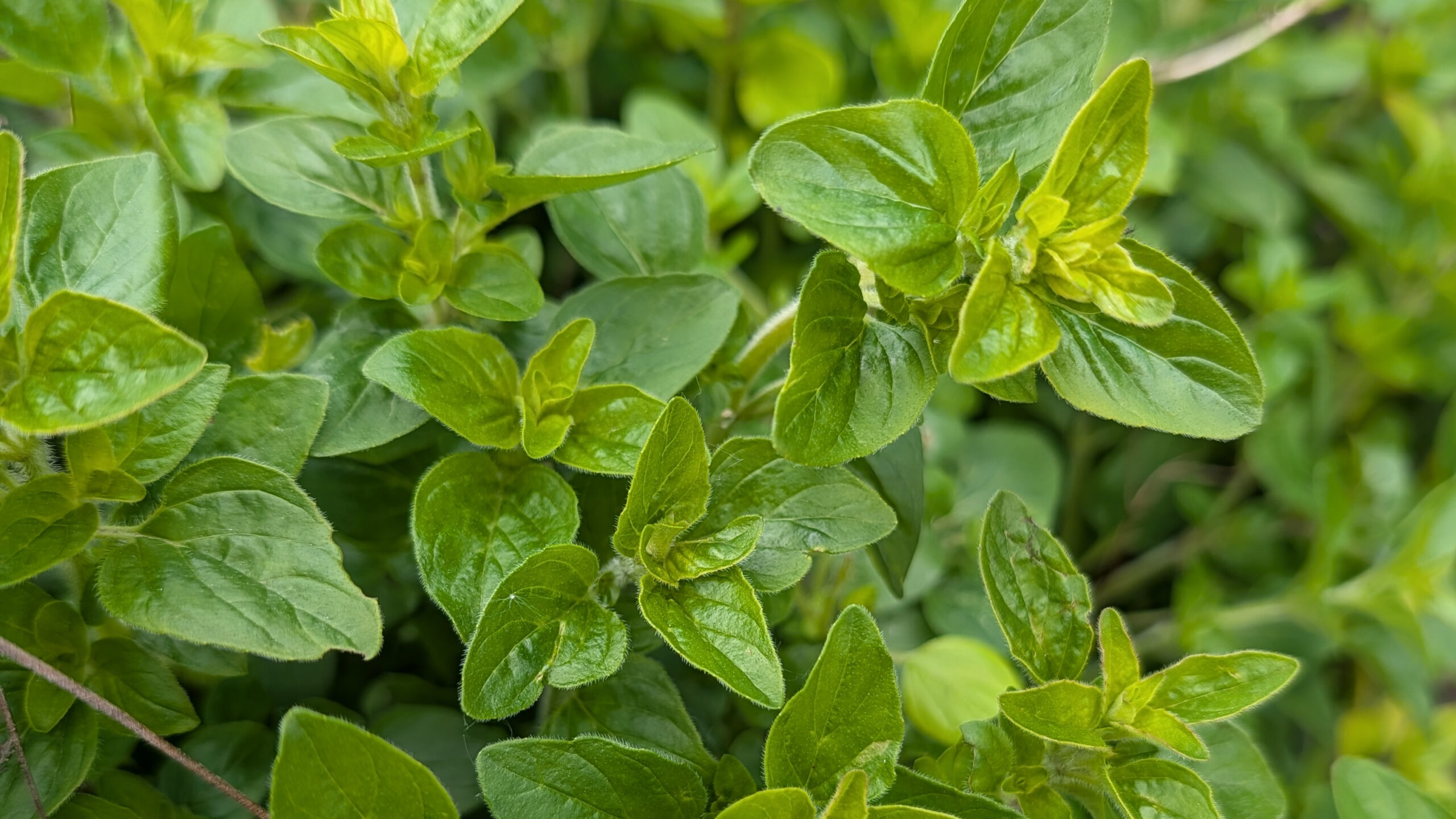
Where to find oregano in Todmorden: Oregano grows at the Medical Garden near the health centre, Pollination street , police station and at the Recovery Beds. It’s a sprawling, low-growing plant with small oval leaves and a wonderfully pungent smell when you rub them between your fingers — warm, slightly resinous, unmistakably Mediterranean.
Oregano butter is bold and deeply savoury, with a warmth that makes you think of Italian cooking — because that’s exactly what it’s made for. This is the butter to spread across a pizza base before the tomato sauce goes on. It’s the butter to rub under the skin of a chicken before roasting. It’s magnificent on grilled courgettes or aubergines, on a thick slice of focaccia, or melted over a bowl of white beans.
Fresh oregano is more delicate in flavour than dried, so use a generous amount. You can intensify the flavour slightly by warming the chopped leaves in a dry pan for thirty seconds before adding them to the butter — just enough to wake them up, not enough to cook them.
Add to the basic recipe:
- 1 small garlic clove, very finely crushed or grated
- 1 tsp lemon juice
- Optional: ¼ tsp dried chilli flakes for heat
Mint butter
Where to find mint in Todmorden: Mint grows at the Golden Garden on Pollination Street and at the recovery beds on the canal. It’s always grown in contained beds or pots for good reason — left to its own devices it’ll take over everything in reach. Pick from the leafy tops for the freshest, most aromatic flavour.
Mint butter is the surprise of the four. People expect it to be sweet or pudding-ish — something for lamb chops, perhaps, if they’re being traditional — but it’s far more versatile than that. The coolness of mint in butter is extraordinary: it brightens the richness of the fat in a way that is genuinely refreshing.
Yes, it’s wonderful with new season lamb and with peas. But try it melted over steamed new potatoes with a pinch of sea salt, or spread on flatbread alongside a bowl of lentil soup. It’s beautiful with grilled halloumi, melted over corn on the cob, or stirred into a simple buttered couscous. A little goes a long way — mint is assertive — so taste as you go.
Add to the basic recipe:
- 1 tsp lemon juice
- A pinch of caster sugar — just enough to balance, not to sweeten
- Optional: a little finely grated lemon or lime zest
Rosemary butter
Where to find rosemary in Todmorden: Rosemary grows at the Medical Garden, Police station and at The Golden Garden. It’s a woody, evergreen shrub that you can harvest from almost year-round — one of the few herbs that genuinely keeps going through a Yorkshire winter. The needle-like leaves are intensely aromatic; even a small amount carries a long way.
Rosemary butter is the most robust and wintry of the four. It has a piney, resinous depth that stands up to strong flavours and high heat — which makes it the one you want for roasting. A few rounds of rosemary butter tucked under the skin of a chicken, or pressed into slashes in a leg of lamb, will fill your kitchen with one of the best smells imaginable.
Because rosemary is so assertive, chop the leaves very finely indeed — almost to a paste. Coarser pieces of rosemary in butter are not pleasant to eat. Take your time with the chopping, or use a mezzaluna if you have one. The reward is a butter with real authority: brilliant on roast vegetables, on a thick-cut steak, on bread alongside a winter soup, or melted into mashed potato with a little garlic.
Add to the basic recipe:
- 1 small garlic clove, very finely crushed
- 1 tsp lemon juice
- Optional: ¼ tsp cracked black pepper
Make more than you need.
One of the best things about compound butter is that it scales effortlessly and keeps for months in the freezer. Make a double or triple batch, label it, and you have a gift that costs almost nothing and is received like something expensive. A log of herb butter, wrapped in greaseproof paper and tied with string, is something people are genuinely pleased to receive. It says: I grew this, I made this, I thought of you.