Kale
Not ready just yet
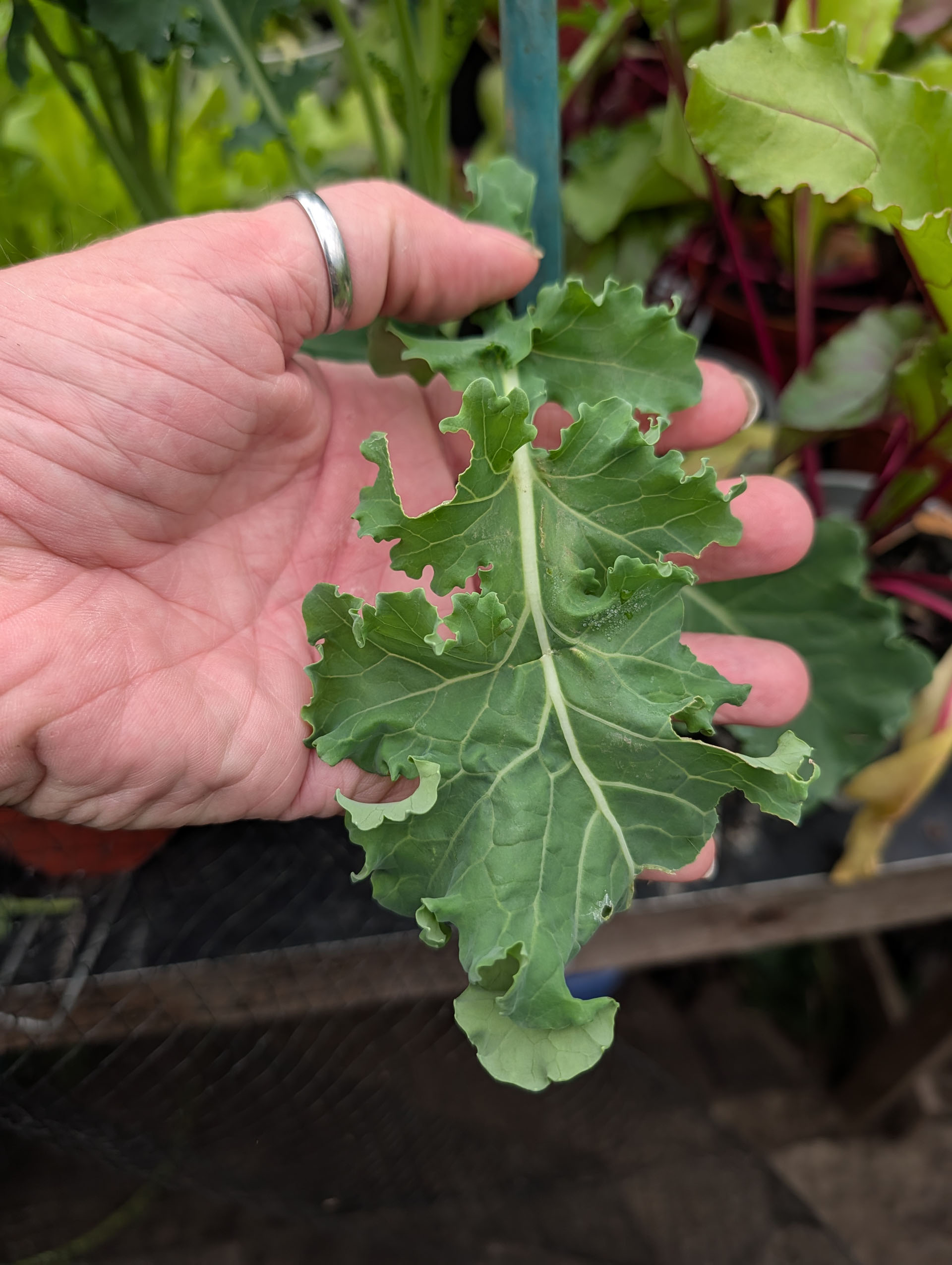
Kale (Brassica oleracea), also called leaf cabbage, is a hardy, leafy brassica that becomes sweeter after frost and crops through the coldest months. Kale is mainly grown for its edible leaves, but its different varieties also allow it to be used as an ornamental plant.
What it's used for
Kale can be placed raw into salads when young and tender or crisped into kale chips. The older leaves are better suited to long, slow cooking and can be added to soups and stews.
Grow your own at home
Kale grows best in firm, fertile soil. It’s advisable to net it against pigeons and cabbage white caterpillars.
It’s best sown from May to July, in cool weather, in a spot with full sun or partial shade. Make sure that the seeds are planted well apart.
The outer leaves can be picked from autumn through winter and into spring.
Our planting guides are designed to help you get the best from your fruit, vegetables, and herbs. Every garden is unique, so growing conditions, weather, soil, and climate can affect results. Use this information as a helpful guide, and adapt it to suit your local conditions and gardening experience. Happy growing!