Lovage: The boldest, most useful herb you’ve probably never cooked with
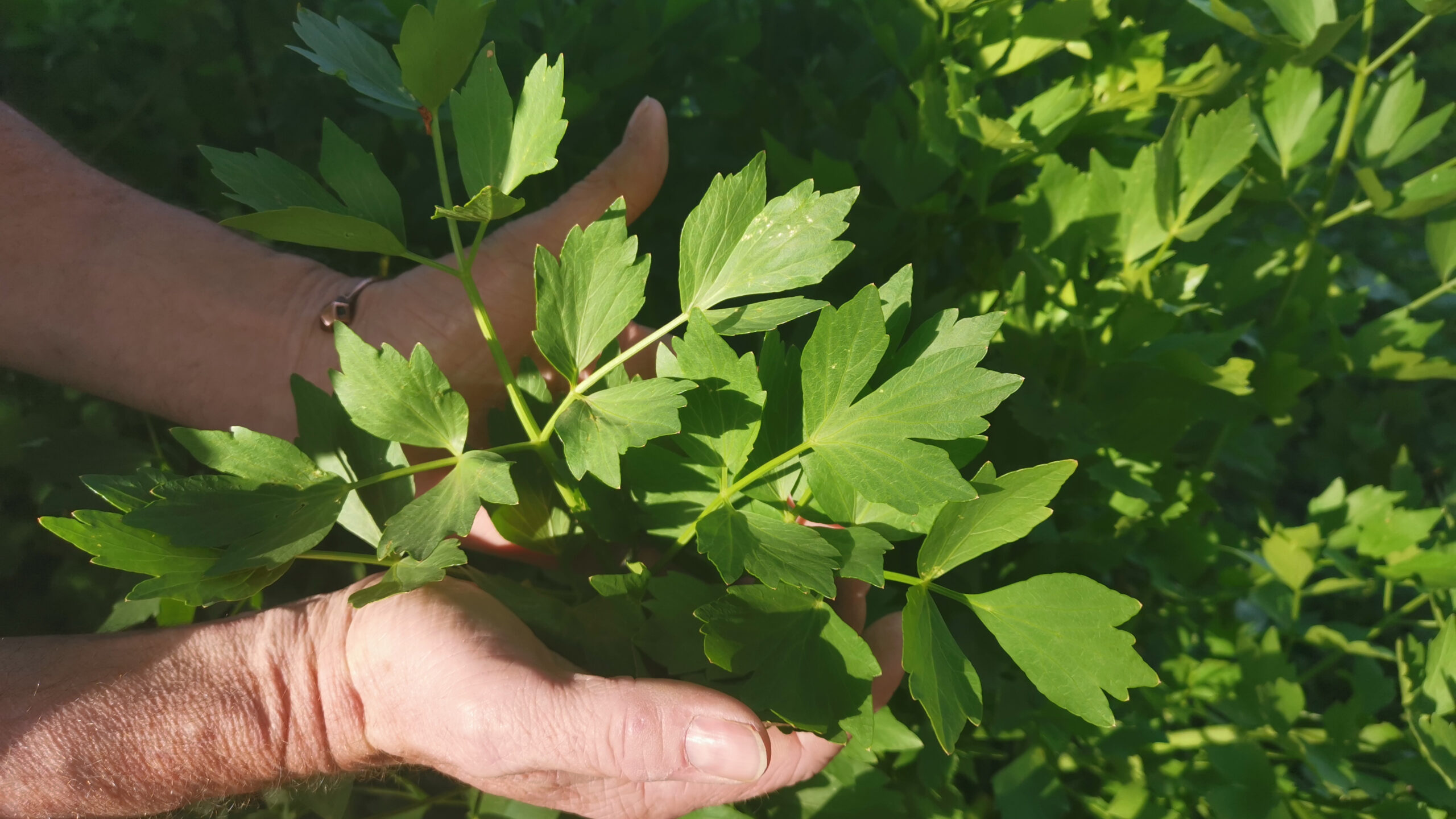
There is a plant in our beds that you cannot miss. It is tall — sometimes reaching two metres or more by midsummer — with bold, glossy, deeply divided leaves and thick hollow stems that smell, when you crush them, of something intensely savoury and not quite like anything else you can name. It is lovage, and it is one of our favourite plants in the whole IET growing year. You will find it at the Golden Garden on Pollination Street, at Library Lock on the canal, at the Medical Garden near the health centre, and at the Recovery Beds.
What is lovage?
Lovage — Levisticum officinale — is a perennial herb in the same family as celery, parsley, and carrot. It is the only species in its genus, native originally to Afghanistan and Iran, and long cultivated across southern Europe. Plant it once in a reasonable spot and it will come back year after year, getting larger and more generous each season.
The flavour is the thing. Lovage tastes of celery — but bolder, deeper, more aromatic, with a savoury intensity that celery gestures towards without ever quite reaching. Food scientists describe it as umami-like: a herb that adds depth and backbone the way a good stock does, or aged cheese, or slow-cooked onions. The leaves are the most used part, but the seeds work as a spice (like caraway, but savoury-aromatic), the young stems can be cooked as a vegetable, and the hollow stems have one particularly enjoyable culinary use we’ll come to. Every part earns its place.
A herb with an extraordinary history
Lovage has been in human kitchens for a very long time. It appears in Apicius, the ancient Roman cookbook that is one of the oldest surviving recipe collections in the world — the Romans used it constantly in sauces, stews, and spice blends, and almost certainly brought it to Britain, where it settled into cottage gardens and stayed for centuries. The name comes from an old French word levesche, derived from the Latin levisticum, referring to the herb’s Ligurian origins in northwest Italy. The folk etymology that turned it into ‘love parsley’ — and led to the seeds being used in medieval love potions — is charming if not quite accurate.
What is accurate is that Charlemagne thought so highly of it that he decreed it should be grown in all his imperial gardens. It was a fixture of monastery gardens across medieval Europe, prized as both a culinary herb and a medicinal one — traditional herbalists used it for digestive complaints, as a diuretic, and to soothe sore throats. The old herbalists called it a warming plant, and that quality comes through in the cooking too.
Somewhere in the last few centuries it was largely forgotten in Britain — celery arrived, easier to buy and milder in flavour, and lovage retreated to the gardens of those who knew better. It remains popular in parts of eastern Europe: in Poland it is known as lubczyk and used regularly in soups; in Romania as leuştean, an essential ingredient in the national sour soup ciorbă. The Poles and Romanians have been quietly right about this all along.
Growing lovage
Lovage asks very little once established. It prefers reasonably fertile, moisture-retentive soil and does best in full sun or partial shade — in the Calder Valley’s damp climate, it tends to thrive. It can be grown from seed, though germination is slow. The fastest route is a division from an existing clump, which is very much the IET way. Once in the ground, it dies back completely each winter and reappears in spring, putting on more size each year. An established plant in its third or fourth year is an impressive thing: architectural, abundant, and entirely self-sufficient.
Choose the location with care — give it at least a metre of space, as it earns every bit of it. The yellow-green flower umbels appear in midsummer and the bees love them; cut the heads before they set seed if you want to prevent gentle self-seeding. Harvest leaves from the outside of the plant from spring onwards. The flavour is most delicate in spring; by midsummer it intensifies, which is when it’s most useful in stocks and soups. Leaves dry and freeze well: blanch briefly, refresh in cold water, and freeze in small portions for winter use.
Lovage in the kitchen
The most important thing: a little goes a long way. This is a herb that flavours from within, builds depth rather than adding freshness, and works over heat rather than being scattered on top. Start with less than you think you need and adjust as you go.
- Stocks and broths. This is where lovage is most irreplaceable. A stem or two in any vegetable or chicken stock adds depth that would otherwise take hours of reduction. Strip out the stems before serving.
- Soups. Lovage and potato soup is the classic — the savoury depth of the herb and the creaminess of potato are made for each other. Also excellent in pea, lentil, and bean soups.
- As a celery substitute. Anywhere a recipe calls for celery — salad, stuffing, a sauce base, a slow-cooked dish — lovage leaves will do the job more intensely. Use less.
- Lovage salt. Blend fresh or dried lovage leaves with flaky sea salt until the salt turns pale green. Dry overnight. The result is a finishing salt with depth and herbal savour — brilliant on potatoes, eggs, grilled vegetables, or chicken skin. It keeps well and makes a lovely gift.
- Compound butter. Made the same way as the herb butters in our earlier blog — one of the most useful things you can keep in the freezer. Drop a round onto grilled fish, stir through pasta, or melt into soup at the last moment.
- The Bloody Mary straw. The hollow stems can be cut to length and used as a straw. As the drink passes through, it picks up that savoury, celery-forward flavour. Completely simple, genuinely impressive.
- Seeds and young stems. Seeds work in bread, cheese, and dressings — like caraway but more savoury. Young spring stems simmered in butter are particularly good alongside fish.
Lovage and potato soup
The soup that converts people. Simple — really just three ingredients plus stock — and the lovage does the work. Don’t be tempted to add too much on your first attempt. It is very good hot and equally good cold.
Ingredients (serves 4)
- 30g butter or 2 tbsp olive oil
- 1 large onion, roughly chopped
- 700g floury potatoes, peeled and roughly diced
- 3–4 tbsp fresh lovage leaves, finely chopped (or 2 stems added whole)
- 1 litre good vegetable or chicken stock
- Salt and white pepper
- A little cream or crème fraîche to finish (optional)
Method
- Melt the butter in a large pan over a medium heat. Add the onion and cook gently for 8–10 minutes until soft and translucent but not coloured.
- Add the potatoes and stir to coat. Pour in the stock and simmer for 15–20 minutes until the potatoes are completely tender.
- If you added lovage stems whole, remove them now. Add the chopped leaves.
- Blend until smooth. Add a splash more stock if the soup is thicker than you’d like.
- Season with salt and white pepper. Taste — if you want more lovage depth, add a little more and simmer two minutes before blending again.
- Serve with a swirl of cream or crème fraîche, a few young lovage leaves, and crusty bread.
Lovage mayonnaise
Ingredients:
- 1 cup lovage leaves (packed)
- 1 clove garlic, 1 egg yolk
- 1 tbsp Dijon mustard
- 1 tbsp lemon juice
- 120ml neutral oil (or olive oil)
- Salt.
Method
- Blanch: Briefly dip the lovage leaves in boiling water for 5–10 seconds, then immediately plunge into ice water. Squeeze dry.
- Blend: In a blender, combine the blanched lovage, garlic, egg yolk, mustard, and lemon juice.
- Emulsify: With the blender running, slowly drizzle in the oil until a thick sauce forms. Season with salt.
Come and find it
Lovage asks almost nothing of the gardener and gives you one of the most useful flavours in the kitchen — available fresh from spring through summer and preserved through winter. Charlemagne understood its value. The Romans built it into their cuisine. The Poles and Romanians never forgot it. We think it’s time the Calder Valley caught up.
Find our lovage at the Golden Garden on Pollination Street, at Library Lock, at the Medical Garden, or at the Recovery Beds. Take a leaf, crush it, smell it. Then make this soup. We think you’ll be back for more.