Making an easy homemade organic fertiliser
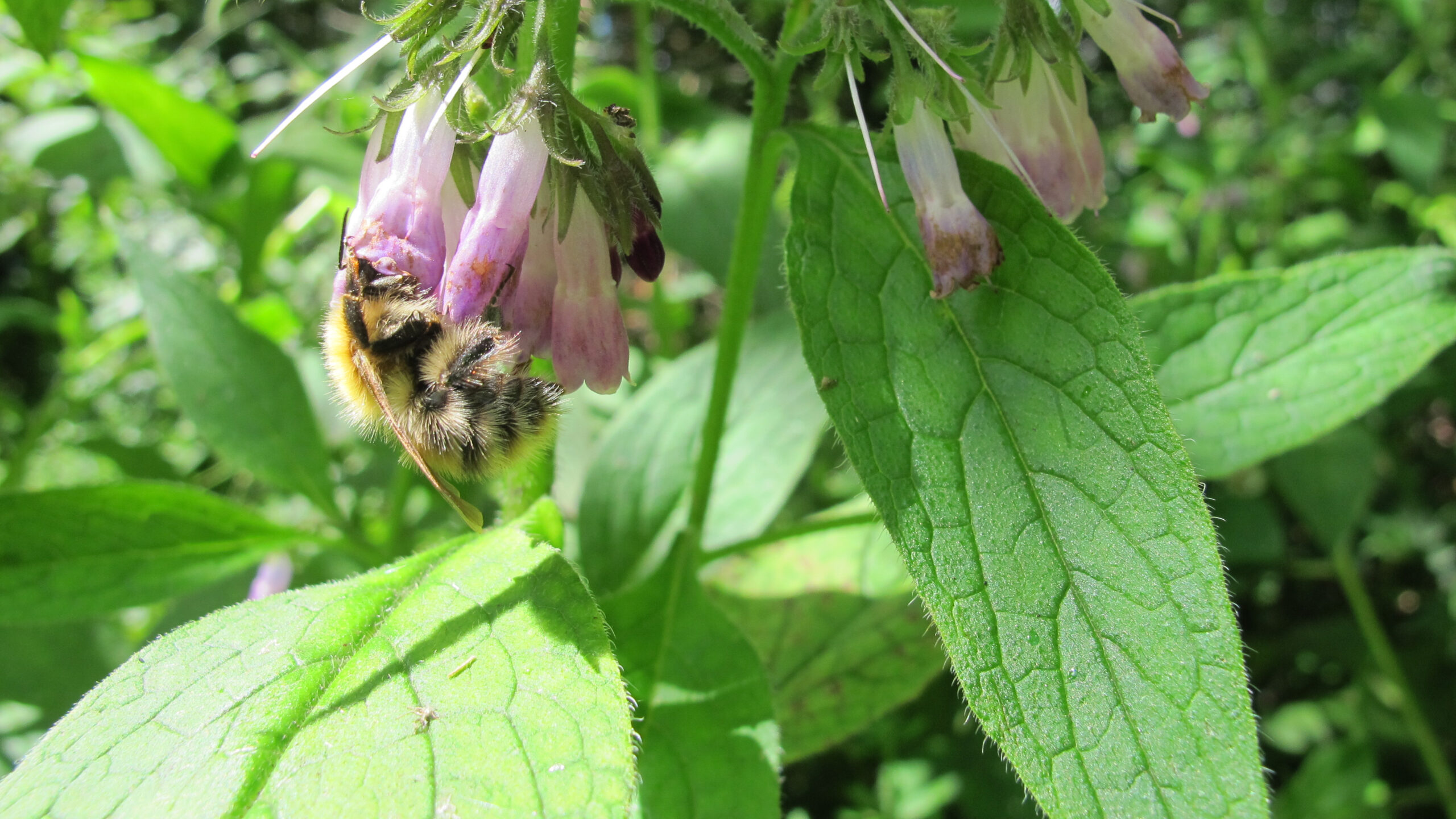
There is a moment, usually around mid-May, when the comfrey plants that have been slowly putting on growth since March suddenly become enormous. The leaves are huge — coarse, hairy, a deep and purposeful green. They flop and sprawl with the confidence of a plant that knows it cannot be stopped. And then, just as you’re wondering whether it has all got a bit out of hand, you cut the whole thing back to a few inches above the ground, stuff the leaves into a barrel of water, put the lid on, and leave it.
Four to six weeks later, you have a dark, nutrient-rich liquid fertiliser that will outperform almost anything you can buy in a plastic bottle from a garden centre. It costs nothing. It requires no packaging, no shipping, no chemistry. It is one of those things that, once you understand it, makes you wonder why everyone doesn’t do it.
Here at Incredible Edible, we are very fond of comfrey. It is exactly the kind of plant that fits our philosophy: generous, low-maintenance, free to anyone who grows it, and quietly radical in its usefulness.
The history of Comfrey
Comfrey has been in human service for a very long time. Its medicinal use stretches back to at least 400 BC, and its common names — knitbone, boneset, bruisewort — tell you everything about what people used it for. The Latin name Symphytum comes from the Greek symphis, meaning ‘growing together of bones’, and phyton, meaning plant. The name comfrey itself derives from the Latin con firma, meaning to grow together. This is a plant so thoroughly associated with healing and binding that it named itself after the act.
For centuries, herbalists used comfrey root and leaf in poultices for sprains, bruises, fractures, and wounds. The active compound responsible is allantoin, which genuinely does stimulate cell growth and promote healing — modern clinical trials have confirmed what folk medicine long understood, and comfrey root extract is now used in licensed topical preparations for muscle and joint complaints across Europe. The old healers were not wrong.
That said, a word of caution belongs here: comfrey also contains pyrrolizidine alkaloids, which are toxic to the liver if ingested in quantity. It was widely used internally in earlier centuries — as a tea, a tincture, in food — but this is no longer recommended, and products for internal consumption containing comfrey are now restricted. Externally, in creams and poultices, it remains a respected medicinal herb. As a garden fertiliser, it is entirely safe and extraordinarily useful. Just don’t drink the tea.
What makes comfrey so extraordinary in the garden
Comfrey is what gardeners call a dynamic accumulator. Its tap roots go extraordinarily deep — far deeper than most vegetables or other garden plants can reach — pulling up minerals and nutrients from subsoil layers that would otherwise remain inaccessible. Those nutrients are stored in the leaves. When you harvest the leaves and break them down, whether by composting, mulching, or brewing into liquid feed, all those minerals become available to other plants growing in the surface soil.
The nutrient profile that matters most is the NPK ratio: nitrogen (N), phosphorus (P), and potassium (K). Comfrey is particularly rich in potassium — the nutrient that drives flowering and fruit production — which is why comfrey liquid feed is especially valued for tomatoes, courgettes, beans, and other fruiting crops. It also contains good levels of nitrogen for leafy growth, phosphorus for root development, and an impressive range of trace minerals and micronutrients. A liquid comfrey feed has a higher NPK ratio than farmyard manure, and the nutrients are in a form that plants can absorb immediately.
It also has one other significant advantage over commercial fertilisers: it builds the soil rather than depleting it. Comfrey leaves, whether composted, mulched, or left as residue after brewing, add organic matter and stimulate microbial activity. This is the kind of feeding that makes your garden better year on year, rather than simply propping up plants in exhausted ground.
How to grow comfrey
The variety to grow is Bocking 14, a cultivar of Russian comfrey (Symphytum × uplandicum) developed in the 1950s by Lawrence Hills, the organic gardening pioneer who founded the organisation now known as Garden Organic. Bocking 14 is sterile — it does not set seed — which is important, because common comfrey can become invasive and is almost impossible to eradicate once established. Bocking 14 stays where you put it, spreads only slowly by root, and can be divided and shared with neighbours, which is very much in the spirit of things.
Because Bocking 14 is sterile, it can only be propagated from root cuttings. These are widely available from organic gardening suppliers, and once you have a plant established, you can divide it yourself to make more. Plant in spring or autumn, spacing plants roughly 60–90cm apart. Comfrey is not fussy about soil and will grow in sun or partial shade, though it does best in a reasonably fertile spot with some moisture. It is not well suited to very dry or very exposed conditions.
One thing to bear in mind: choose your location carefully. While Bocking 14 won’t seed itself around, it will grow back vigorously from any piece of root left in the ground, so moving an established plant is not straightforward. Give it a permanent spot — the edge of a growing bed, a corner of a plot, alongside a path — and plan to leave it there. In return, it will need almost no attention: no watering once established, no feeding, no particular care.
In the first year, let the plant establish without cutting it. From the second year onwards, you can harvest the leaves up to four times through the growing season — cutting the whole plant back to about 5cm above the ground each time. It regrows remarkably fast, often putting on a full new flush of growth within three or four weeks in warm weather. The flowers, which appear in late spring and are a favourite with bumblebees, can be left on before the first cut; thereafter, cutting before flowering keeps the maximum nutrients in the leaves.
Making comfrey liquid feed
There are two methods, and the choice between them comes down to one thing: how much you mind the smell. Comfrey rotting in water produces a liquid that smells genuinely unpleasant — rich, dark, farmyardy, and persistent. This is not a reason to avoid it; it is a reason to keep the lid on and site the barrel somewhere sensible. If the smell is a real concern, the concentrate method below avoids it almost entirely.
Method 1: The barrel brew (diluted feed)
This is the simplest approach and produces a ready-to-use feed once diluted. You will need a large barrel, bin or bucket with a lid.
- Fill the container roughly a quarter full with chopped or torn comfrey leaves, packing them down well. An old hessian sack filled with leaves and submerged in the barrel works particularly well — a giant tea bag, in effect.
- Fill the rest of the container with water. Rainwater is ideal if you have it.
- Put the lid on firmly. This is important — the smell during fermentation is significant.
- Leave for four to six weeks, stirring occasionally if possible.
- The resulting liquid will be dark brown and strongly smelling. Dilute it at a ratio of one part comfrey to ten parts water before using. If it is very dark, dilute further.
- Use it immediately or store in sealed containers in a cool dark place. Use within four weeks once diluted.
Method 2: The concentrate (no water added)
This method produces a much more concentrated liquid and generates far less smell, since without added water the fermentation is different. You will need a container with a small hole drilled in the base, set over a jar or bowl to catch the liquid.
- Pack the container tightly with comfrey leaves, pressing them down hard. Weight the top with a brick or similar to compress the leaves further.
- Over the following weeks, the leaves will break down and a dark, thick liquid will slowly drip through the hole in the base.
- Collect this liquid in the jar below. It is highly concentrated.
- Dilute at a ratio of one part concentrate to fifteen or twenty parts water before using. A little goes a long way.
How and when to use it
Comfrey liquid feed is particularly valuable for fruiting and flowering crops — the high potassium content is what they need once they come into flower. As a general guide:
- Tomatoes: feed weekly once the first flowers appear, and continue through fruiting. Comfrey is almost the ideal tomato feed.
- Courgettes, squash, and cucumbers: feed every ten to fourteen days once flowering begins.
- Potatoes: lay wilted comfrey leaves in the planting trench before putting the tubers in. The leaves rot quickly and feed the developing crop directly.
- Container plants: particularly valuable, since compost nutrients exhaust quickly. Feed every two weeks from early summer.
- Compost heaps: add comfrey leaves directly as an activator. They break down fast and kickstart the whole heap.
- As a mulch: lay fresh or wilted leaves directly around plants. They break down quickly, feeding the soil and suppressing weeds at the same time.
Always water comfrey feed onto the soil rather than over the leaves — the concentrated liquid can scorch foliage if applied directly. Water in well after applying.
A plant that gives back. Its flowers feed the bees. Its roots improve the soil. Its leaves feed your vegetables. And it has been doing all of this, quietly and reliably, for thousands of years.