Sweet cicely: A forgotten herb?
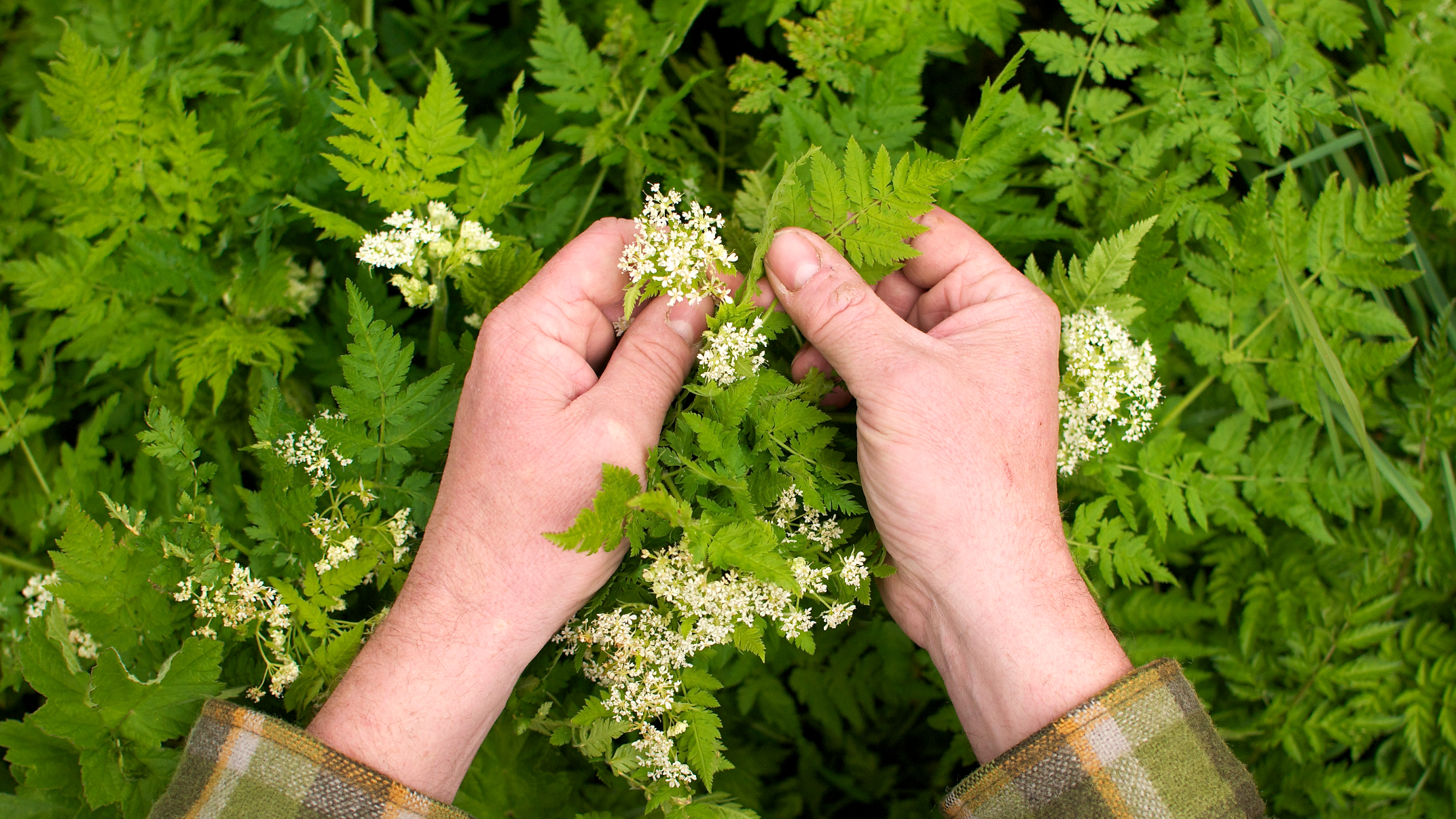
Sweet cicely: the forgotten herb growing along our canal, in our Medical Garden and some secret places around town.
There is a plant growing in places along the Rochdale Canal towpath and in the IET Medical Garden that most people walk right past without a second glance. It has soft, feathery leaves like a very delicate fern, small clusters of white flowers in spring, and a smell, when you crush a leaf between your fingers, that is unmistakably of aniseed — warm, sweet, faintly liquorice-like, with a freshness underneath it that is all its own. That plant is sweet cicely, and it is one of the most quietly remarkable herbs you will ever use in a kitchen.
It is also, bafflingly, almost entirely absent from modern cooking. Ask most people what sweet cicely is and they’ll look at you blankly. It doesn’t appear in the supermarket herb section. It rarely features in recipe books. And yet it was a staple of British kitchens for centuries — a plant so valued that it was grown in monastery gardens, cottage gardens, and apothecary plots across the whole country. We’ve simply forgotten it. Here in Todmorden, we’d rather like to remember.
What is sweet cicely?
Sweet cicely — its Latin name is Myrrhis odorata — is a perennial herb native to the mountains of central Europe, which has naturalised widely across northern Britain. It loves damp, shaded spots, which is why you’ll find it flourishing along our canal bank and thriving in the sheltered beds of the Medical Garden. In the Calder Valley, with its damp air and steep wooded sides, it feels entirely at home.
It is a big, generous plant, growing to a metre or more in good conditions, with large hollow stems and those distinctive feathery, pale-blotched leaves that look a little like cow parsley — to which it is related. The leaves are soft and finely divided, often with pale blotches, and the whole plant has a pleasantly lush, slightly tropical appearance when it is growing well. The flowers appear in May and June as frothy white umbels, very pretty, and themselves edible. The seeds that follow are long, ribbed and dark green when fresh, turning brown as they ripen. Both seeds and leaves carry the characteristic aniseed flavour, and the seeds in particular are exceptionally sweet — almost confectionery-sweet — which gives the plant its name.
A serious warning: know what you are picking
Sweet cicely belongs to the Apiaceae family — the same broad family as cow parsley, wild carrot, and fennel. This is a family that also contains some of the most poisonous plants in Britain, and anyone foraging from it must take identification seriously. Do not pick and eat any white-flowered, feathery-leaved plant from the waterside or hedgerow without being certain of what it is.
The two plants most likely to be confused with sweet cicely are hemlock (Conium maculatum) and hemlock water dropwort (Oenanthe crocata). Both are common in damp habitats, both have white umbel flowers and feathery leaves, and both are seriously toxic. Hemlock water dropwort in particular is considered one of the most poisonous plants in Britain — all parts of the plant are dangerous, and it grows readily along riverbanks and canal margins. These are not plants to take chances with.
The good news is that sweet cicely has a reliable and unmistakable identifying feature: its scent. Crush a leaf firmly between your fingers. If it smells strongly and clearly of aniseed — that warm, sweet, liquorice-like smell — you have sweet cicely. If the smell is absent, faint, or in any way different from that clear aniseed character, do not use the plant. Neither hemlock nor hemlock water dropwort smells of aniseed; hemlock, in fact, has an unpleasant, musty smell quite distinct from sweet cicely’s sweetness.
Always: crush the leaf and smell it before picking. If in any doubt whatsoever, leave it alone. The sweet cicely in our Medical Garden and in the canal-side beds has been planted and identified by people who know the plant well — if you are new to foraging and want to be shown it in person before picking it yourself, come along to one of our growing sessions and ask.
The herb that reduces how much sugar you need
Here is the thing that made sweet cicely so valued historically, and which makes it so interesting today: it genuinely reduces the amount of sugar you need in a recipe. It works similarly to the way that stevia is a sweetener — it doesn’t replace sugar chemically — but by contributing its own natural sweetness and by softening the sharpness of acidic fruits, it allows you to use significantly less sugar and still achieve the same balanced result.
This matters most with fruit like rhubarb, gooseberries, and cooking apples — the fruits that traditionally require a lot of sugar to be palatable. Add sweet cicely to a rhubarb compote and you can cut the sugar by a third, sometimes half, and the result tastes rounder and more interesting than it would with sugar alone. At a time when most of us are thinking about how to eat a little less sweetly without sacrificing pleasure, this feels quietly revolutionary. The recipe below uses just 25g of sugar for a full bunch of rhubarb. Try that without the cicely and you’ll understand what the plant is doing.
Using sweet cicely in the kitchen
The leaves are the most accessible part of the plant and available from early spring, often before much else is growing. Use them fresh, chopped finely, added towards the end of cooking or stirred in afterwards — prolonged heat diminishes their flavour. They are wonderful with stewed fruit of all kinds: rhubarb, gooseberries, plums, apples. They work beautifully in a salad dressing where you want a gentle sweetness without adding sugar. Finely chopped, they can be folded into whipped cream for a flavour that pairs remarkably well with sharp fruit.
The seeds, when fresh and green, can be eaten as they are — remarkably sweet and aniseed-flavoured, a good thing to show children in a garden because the reaction is always one of surprise and delight. They can also be chopped and used in salads and fruit dishes. The roots are edible too, though less commonly used.
What to pair with it: rhubarb is the classic, and the most obvious, but sweet cicely has a particular affinity with anything sharp or acidic. Gooseberries are exceptional. So are plums and damsons. It works in savoury cooking too — try a little in a salad dressing, or with carrots, or with parsnips roasted with a touch of honey. Its flavour is unusual enough to be interesting without being difficult or acquired.
Where to find it in Tod
Sweet cicely grows at two of our growing sites. In the IET Medical Garden near the health centre, it sits among the other heritage and medicinal herbs that make that bed such a remarkable collection — plants chosen for their history of use as much as their culinary value. Along the Rochdale Canal towpath you will find it growing naturalised in the shadier stretches, particularly where the bank is damp and the tree cover gives it shelter. Another place to find it in Tod is down the new path along the river behind the market. Look for those tall, feathery-leaved plants in spring and early summer, crush a leaf, and let the aniseed smell confirm you’ve found it.
As with everything in our beds and along our public growing spaces: help yourself to a small amount for cooking, leave plenty for others and for the plant to continue growing strongly, and take a moment to appreciate what’s there. These are spaces that belong to everyone in Tod.
Rhubarb, ginger and sweet cicely compote
This is a compote that earns its place on the breakfast table every morning of the season. The ginger gives it warmth, the sweet cicely does its quiet work of softening the rhubarb’s sharpness, and the whole thing comes together with barely any sugar at all. It keeps in the fridge for a week, and freezes well. Make a big batch when the rhubarb is at its best.
Ingredients
- 1 good bunch of rhubarb — 5 to 7 medium stems
- 5cm piece of fresh ginger
- A good handful of sweet cicely leaves and stems
- 25g sugar or honey
Method
- Slice the rhubarb into pieces of roughly 2cm. Peel and grate the ginger. Finely chop the sweet cicely leaves and stems.
- Put everything into a pan with the sugar or honey and mix thoroughly. Leave to sit for ten minutes — this draws out some of the rhubarb’s juice and gets the cooking off to a gentle start.
- Place the pan on a low heat and cook, stirring regularly. The goal is for the rhubarb to release enough liquid to stew in its own juice. Keep the heat gentle and your attention close.
- If you’re worried it might catch before the juice is flowing, add a very small amount of water or orange juice — no more than a tablespoon. The juice from the rhubarb itself is preferable.
- After 10–15 minutes the rhubarb should be beginning to soften and collapse. When it’s tender but still holding some shape, take it off the heat and leave to cool.
- Serve with yoghurt for breakfast, or fold through equal amounts of whipped cream to make a rhubarb fool.
Note on the sugar: the sweet cicely is doing real work here. 25g is a fraction of what most rhubarb recipes call for. Taste the compote as it cooks and trust what the cicely is contributing before you reach for more sweetness.